Solar panels produce direct current, but most buildings use alternating current. The inverter converts one to the other, and it also shapes how your whole system behaves, including during a power cut.
The three main types
Grid-tied inverters run alongside the utility supply. They can reduce daytime bills and are often the simplest option. For safety, a standard grid-tied inverter usually shuts down during an outage, so panels alone will not keep your lights on.
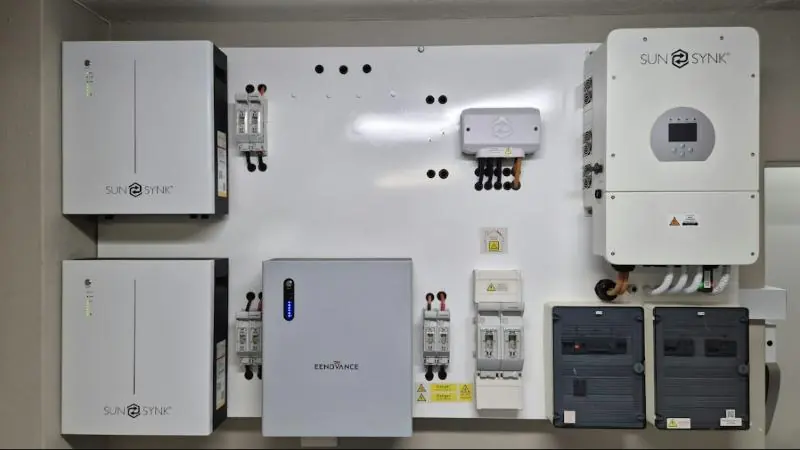
Hybrid inverters manage panels, batteries and the grid together. They can supply backup circuits during an outage and store solar energy for later. They suit sites with frequent interruptions or high evening use.
Off-grid inverters work with batteries and no utility connection, often with a generator as backup. Sizing needs extra care, because there is no grid to cover a shortfall.
How to choose
Answer these questions first:
- Are you mainly trying to reduce bills, keep power on, or both?
- What loads must stay on during an outage?
- How long are your typical outages?
- Do you have single-phase or three-phase power?
- Will you add panels or batteries later?
What to size for
Continuous power must cover the loads running together. Surge capacity matters for motors such as pumps, compressors and lifts, which draw much more when they start. Panel input limits set how many panels the inverter can safely accept.
Installation details matter
Inverters need ventilation and protection from sun and dust. Include proper isolators, surge protection and earthing. Separating essential circuits lets a smaller system support what matters most.
In Kenya, solar work is regulated by EPRA, so check that your installer holds the appropriate licence. Then read about battery choices and net metering.