The battery often has the biggest effect on the long-term cost and reliability of a solar or backup system. Most projects now choose between lithium iron phosphate (LiFePO4) and some form of lead-acid.
How they compare
Upfront cost. Lead-acid usually costs less at the start.
Usable capacity. A lead-acid battery lasts longer if it is not deeply discharged, so designers often use only part of its rated capacity. LiFePO4 can usually be discharged further, although you should follow the manufacturer's limits.
Cycle life. LiFePO4 generally offers many more charge cycles, which matters when batteries cycle daily.
Maintenance. Flooded lead-acid needs water top-ups and ventilation. Sealed lead-acid and LiFePO4 need less routine attention, but they still need inspection.
Weight and space. LiFePO4 is lighter for the same usable energy.
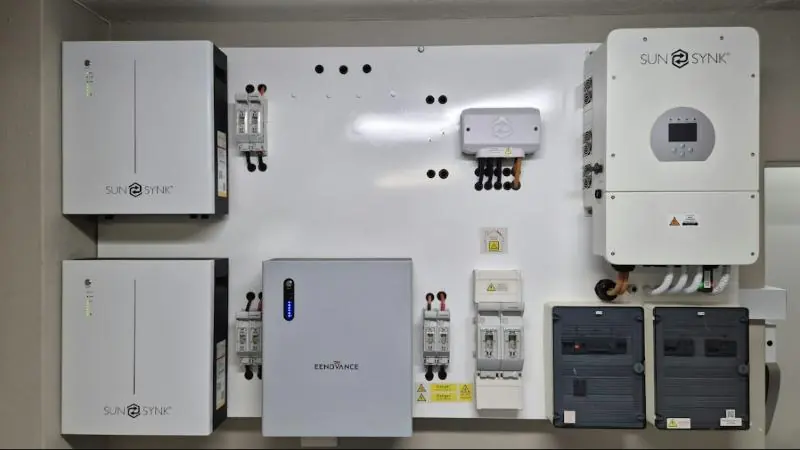
Compatibility. LiFePO4 batteries include a battery management system that may need to communicate with the inverter. Check compatibility before you buy.
Compare cost per usable kilowatt-hour
The purchase price does not show the whole cost. A better comparison is:
- Find the usable energy per cycle.
- Multiply it by the expected cycles at your depth of discharge.
- Divide the total installed cost by the result.
Use warranty terms and your real operating temperature, because heat can shorten battery life.
Match the battery to the job
A site that loses power only occasionally may have different needs from a home or office that cycles batteries every evening. List the loads you must keep running and for how long. Essential loads may be enough, and that can reduce the battery size considerably.
Install it safely
Batteries store a lot of energy. They need correct fusing, cabling, ventilation, labelling and a location away from heat and flammable materials. See how batteries fit with the wider system in our guide to inverters.